Mastering String Art Mountains Paintings Threads for Modern Laser Cutting Projects
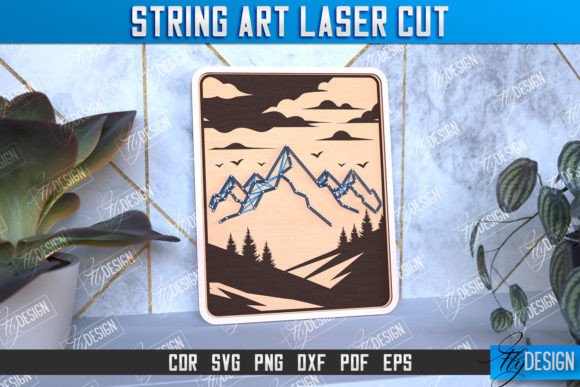
The intersection of traditional craftsmanship and digital fabrication has created a vibrant niche in the maker community, where String Art Mountains Paintings Threads serve as a bridge between analog aesthetics and precision engineering. For creators, educators, and small business owners, understanding how to translate complex visual designs into machine-readable formats is essential. This guide explores the technical and artistic considerations of producing high-quality string art using laser-cut bases, focusing on the seamless integration of design files with cutting hardware.
The Evolution of Digital String Art Design
String art, traditionally known as thread art or pin and thread art, involves winding colored threads around arranged pins to create geometric patterns or images. While the manual process is meditative and accessible, the modern demand for consistency and scalability has driven the adoption of Computer Numerical Control (CNC) technologies. The creation of String Art Mountains Paintings Threads designs now often begins with sophisticated algorithms that calculate optimal pin placement and thread paths to reproduce photographic details or abstract landscapes with remarkable fidelity.
This digital transformation allows artists to experiment with complex topographies, such as mountain ranges, where gradient shading and depth are critical. By leveraging software that converts images into vector paths, creators can generate instructions that dictate exactly where each nail should be placed and how the thread should traverse the board. The result is a hybrid product that retains the tactile warmth of handmade crafts while benefiting from the reproducibility of industrial manufacturing.
Understanding File Formats for Laser Compatibility
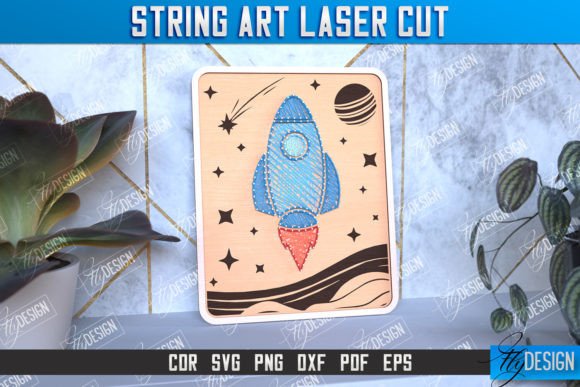
One of the most critical aspects of preparing a project for production is ensuring file compatibility with your specific laser cutting machine. A robust digital product package typically includes a variety of formats to accommodate different software ecosystems. When working with String Art Laser Cut Handmade Gifts Paintings Threads CNC File assets, you will commonly encounter SVG, EPS, PNG, PDF, and DXF files. Each format serves a distinct purpose in the workflow.
- SVG (Scalable Vector Graphics): Ideal for web-based design tools and many modern laser software interfaces. SVGs maintain quality at any scale, making them perfect for resizing projects without losing precision.
- DXF (Drawing Exchange Format): A standard in the CAD industry, DXF files are highly compatible with professional-grade laser controllers and CNC machinery. They provide precise geometric data required for accurate cutting.
- EPS (Encapsulated PostScript): Often used by graphic designers, EPS files are versatile for editing in illustration software before exporting to machine-specific formats.
- PNG (Portable Network Graphics): While primarily a raster format, PNGs are useful for previewing the final aesthetic or using as reference images during the assembly process. High-resolution PNGs can also be used for engraving detailed textures if the machine supports raster imaging.
- PDF (Portable Document Format): Useful for documentation, printing instructions, or viewing the design layout without specialized software.
It is crucial to verify that your cutting machine and software can interpret these files correctly. Most hobbyist and professional lasers accept SVG and DXF natively, but checking your manufacturer’s specifications ensures a smooth workflow. If you require a different file type or a specific color size for a PNG reference, reaching out to the designer for customization is often a viable option.
Interpreting Cut and Engrave Instructions
Precision in laser cutting relies heavily on clear visual cues within the design file. In many standardized templates for string art bases, color-coded lines indicate different machine actions. Understanding these conventions prevents material waste and ensures the structural integrity of your final piece.
Typically, a RED line signifies a CUT path. These vectors tell the laser to cut completely through the material, creating the outer shape of the board and any internal holes for pin placement. The accuracy of these cuts is paramount, as misaligned holes can make the threading process frustratingly difficult. On the other hand, a BLACK line usually indicates an ENGRAVE path. Engraving removes only the surface layer of the material, which can be used to add decorative elements, labels, or subtle texture to the background of the string art piece.
Before running a full job, it is advisable to perform test cuts on scrap material. This step allows you to calibrate power and speed settings to match the specific thickness and type of wood or acrylic you are using. Proper calibration ensures clean edges on cut lines and consistent depth on engraved areas, enhancing the overall professional appearance of the String Art Mountains Paintings Threads project.
Material Selection and Structural Considerations
The choice of base material significantly impacts the durability and aesthetic of the final artwork. Wood remains the most popular choice for string art due to its natural warmth and ability to hold nails securely. Plywood, particularly birch or maple, offers a smooth surface and consistent density, which is ideal for laser cutting. Hardwoods provide a premium look but may require adjustments to laser settings due to their varying grain structures.
When creating String Art Laser Cut Handmade Gifts Paintings Threads items, consider the thickness of the material. A base that is too thin may warp under the tension of the threads, while one that is too thick might make it difficult to insert pins or nails evenly. Typically, materials between 3mm and 6mm thick offer a good balance of stability and ease of use. Additionally, the finish of the wood can be enhanced with stains or seals after cutting, allowing the natural grain to complement the colorful threads.
Acrylic is another viable option, particularly for modern, minimalist designs. It offers a sleek, contemporary look and can be cut with high precision. However, acrylic does not hold nails as well as wood, so alternative attachment methods, such as adhesive pins or specialized framing techniques, may be necessary. Understanding the properties of your chosen material helps in selecting the appropriate CNC File settings and assembly strategies.
Practical Applications and Market Relevance
The versatility of laser-cut string art bases opens up numerous opportunities for creators and businesses. For hobbyists, these projects provide a satisfying blend of technical challenge and artistic expression. Educators can use them to teach concepts in geometry, physics, and computer-aided design, demonstrating how mathematical principles translate into tangible art. The repetitive nature of threading also offers therapeutic benefits, making it a popular activity for stress relief and mindfulness.
From a commercial perspective, String Art Mountains Paintings Threads designs are highly marketable as handmade gifts and home decor. The personalized nature of string art allows for customizations in color schemes and sizes, appealing to consumers looking for unique, bespoke items. Small business owners can leverage digital files to produce consistent, high-quality products efficiently. By offering a range of designs, from intricate landscapes to simple geometric patterns, sellers can cater to diverse tastes and interior design trends.
Moreover, the availability of ready-to-cut digital files lowers the barrier to entry for new entrepreneurs. Instead of spending hours designing complex vector paths, creators can focus on assembly, finishing, and marketing. This shift allows for greater scalability and innovation in product offerings. Whether you are creating a single piece for a friend or producing a batch for an online store, the efficiency of using pre-designed String Art Laser Cut Handmade Gifts Paintings Threads CNC File packages cannot be overstated.
Optimizing Your Workflow for Best Results
To achieve the best outcomes with your laser cutting projects, consider adopting a structured workflow. Start by selecting a design that matches your skill level and available materials. Download the complete archive, including SVG, EPS, PNG, PDF, and DXF files, to ensure you have backups and alternatives. Import the chosen file into your laser software and verify the scale and orientation.
Pay close attention to the color-coded instructions: ensure red lines are set to cut and black lines to engrave. Adjust power and speed settings based on material tests. After cutting, sand the edges lightly to remove any char marks or splinters, enhancing the tactile quality of the piece. When assembling, use a template or the printed PDF guide to place nails accurately. Consistent nail height and spacing are key to achieving smooth, even thread layers.
If you encounter issues with file compatibility or need adjustments to the design, do not hesitate to contact the designer. Many creators are willing to provide additional support or customized files to ensure customer satisfaction. Engaging with the community and following designers for future releases can also provide inspiration and access to new techniques and trends in the field.
By combining technical precision with creative vision, you can transform simple threads and wood into stunning works of art. The world of laser-cut string art offers endless possibilities for exploration, making it a rewarding pursuit for anyone interested in the fusion of technology and craftsmanship.