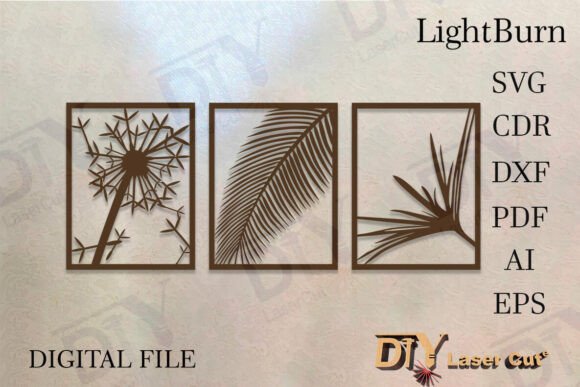
Evaluating the Triptych with Palm Trees and Dandelion for Laser Cutting Projects
In the realm of digital fabrication and interior design, the intersection of natural aesthetics and precise engineering often yields the most compelling results. For creators working with laser cutters, finding vector assets that balance artistic nuance with technical reliability can be a challenge. The Triptych with Palm Trees and Dandelion represents a specific category of design asset that addresses this need by offering a harmonious blend of botanical elements optimized for material subtraction. This article examines the practical utility, design integrity, and application potential of this specific vector file set for professionals and serious hobbyists.
Design Composition and Aesthetic Value
The core appeal of this triptych lies in its compositional balance. Unlike generic floral patterns that may feel repetitive or overly dense, this design utilizes a three-panel structure to create a narrative flow across a wall or surface. The sequence typically features a large palm leaf, followed by a dandelion in its seed stage, and concluding with a varying palm species. This arrangement is not merely decorative; it introduces rhythm and variation in line weight and organic shape.
From an interior design perspective, the motif bridges the gap between tropical vibrancy and minimalist elegance. The palm leaves provide broad, sweeping curves that catch light and shadow differently depending on the material used, while the dandelion introduces intricate, fine detailing that tests the precision of the cutting equipment. For marketers and studio owners looking to elevate a physical space without committing to permanent structural changes, this type of wall art offers a high-impact visual solution. The "modern style" mentioned in product descriptions is achieved through the isolation of these elements against negative space, allowing the material itself to become part of the aesthetic rather than just a canvas for paint.
Technical Specifications and File Compatibility
For any digital asset intended for manufacturing, file versatility is paramount. The value of the Triptych with Palm Trees and Dandelion vector package is significantly enhanced by its availability in seven distinct formats: SVG, DXF, AI, CDR, EPS, PDF, and LightBurn. This breadth of compatibility ensures that the file integrates seamlessly into diverse workflows, regardless of the software ecosystem a creator prefers.
- SVG and DXF: Essential for users operating open-source software like Inkscape or proprietary CNC control software. These formats ensure clean path definition without unnecessary metadata.
- AI and EPS: Critical for graphic designers using Adobe Illustrator who may need to modify anchor points or integrate the design into larger branding materials before sending it to the cutter.
- CDR: Maintains relevance for users invested in the CorelDRAW environment, common in certain signage and engraving shops.
- PDF: Offers a universal viewable format that preserves vector data, useful for client approvals or quick checks.
- LightBurn: A specialized inclusion that speaks directly to the laser cutting community, allowing for immediate import and parameter setup without conversion errors.
The optimization of these files for laser cutting is a crucial detail. A well-prepared vector file for this purpose should have closed paths, minimal nodes, and correct line coloring or layering to distinguish between cut and engrave operations. When evaluating this triptych, one should look for evidence that the intricate dandelion seeds are spaced appropriately to prevent structural failure in brittle materials like acrylic, while the broader palm sections are designed to minimize cutting time without sacrificing detail.
Material Considerations and Fabrication
The physical realization of the Triptych with Palm Trees and Dandelion depends heavily on material selection. The design is specified for materials with a thickness of 3 mm, which is a standard gauge for both plywood and cast acrylic. This thickness strikes a balance between durability and delicacy; it is robust enough to hold fine details like the dandelion filaments but thin enough to allow for layered mounting if a 3D effect is desired.
Plywood and Wood: When cut from birch or bamboo plywood, the organic nature of the design is amplified by the grain of the wood. The contrast between the dark kerf lines left by the laser and the light wood surface creates a rustic yet refined look suitable for living rooms or offices. However, users must account for the varying density of wood, which can affect the consistency of the cut on very fine details.
Acrylic: For a more contemporary, sleek finish, acrylic is the superior choice. Edge-lighting acrylic cuts of the palm leaves can create a glowing effect when mounted near LED strips. The high contrast of black or white acrylic against a painted wall emphasizes the silhouette of the dandelion and palms. It is important to note that acrylic requires different power and speed settings than wood to achieve a flame-polished edge rather than a frosted one.
Practical Applications and Market Fit
Who benefits most from acquiring this specific vector file? The utility extends beyond simple home decoration. Small business owners in the custom gift sector can utilize this design to create personalized housewarming presents or corporate gifts that feel bespoke rather than mass-produced. The triptych format allows for modularity; a client might purchase just the central dandelion panel for a smaller space, or the full set for a feature wall.
Educators and workshop leaders in maker spaces will find this file valuable for teaching intermediate laser cutting techniques. The variation in complexity between the solid palm shapes and the delicate dandelion provides an excellent case study for discussing power settings, nesting, and material constraints. Furthermore, interior designers and stagers can use these cutouts as temporary art installations for photo shoots or open houses, where the need for lightweight, easily mountable decor is essential.
In commercial environments such as yoga studios, spas, or boutique hotels, the natural imagery aligns perfectly with branding focused on wellness and tranquility. The "natural beauty" cited in the design description is not just a marketing phrase but a functional attribute that contributes to biophilic design principles—connecting occupants with nature to improve well-being.
Limitations and Professional Recommendations
While the Triptych with Palm Trees and Dandelion offers significant advantages, realistic expectations are necessary for successful execution. The primary limitation lies in the fragility of the dandelion component when scaled incorrectly or cut in unsuitable materials. If a user attempts to scale the file down significantly for a small ornament, the fine lines of the dandelion seeds may become too thin to survive the cutting process or handling, leading to breakage. It is recommended to maintain the original scale or only scale up.
Additionally, the "hardware" aspect mentioned in some listings refers to the mounting system, which is rarely included in digital file purchases. Professionals must plan the mounting strategy in advance. For wood, hidden dowels or French cleats work well. For acrylic, standoff mounts provide a floating appearance. Failure to plan for installation can result in a beautiful cut piece that looks amateurish once hung.
Another consideration is the finishing process. Laser cutting leaves residue, particularly on wood (soot) and acrylic (flame marks). To achieve the "exquisite accent" promised by the design, post-processing is non-negotiable. This may involve light sanding, wiping with appropriate solvents, or painting. The vector file provides the shape, but the finish determines the perceived quality.
Long-Term Value and Workflow Integration
Investing in a high-quality vector file like this triptych offers long-term value through reusability. Unlike a physical print that degrades, a digital asset can be recalled indefinitely for new projects. The availability of multiple formats future-proofs the purchase against software changes. As a creator's toolkit evolves, having the source file in AI or CDR allows for modifications that might be needed for specific client requests, such as altering the leaf shapes or combining the triptych with text elements.
Ultimately, the Triptych with Palm Trees and Dandelion serves as a reliable resource for those seeking to merge digital precision with organic form. Its strength lies not just in the visual appeal of the palm and dandelion motifs, but in the technical foresight applied to its file structure and material specifications. For the discerning maker, it represents a starting point for creativity rather than a finished product, demanding skill in execution but rewarding that effort with a sophisticated end result.