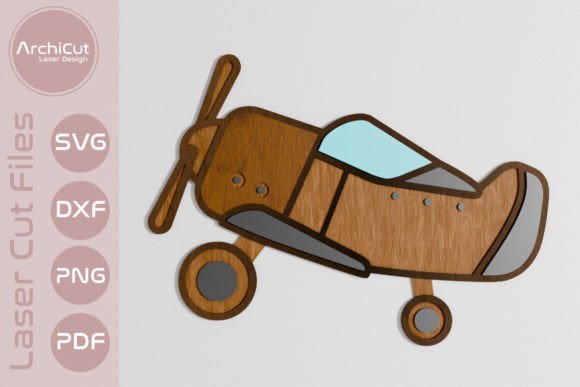
Evaluating the Airplane Flight Baby Kids Laser Cut Design for Makers
In the realm of digital fabrication, the difference between a project that stalls and one that succeeds often comes down to the quality of the source file. For creators working with laser cutters and CNC routers, finding reliable, well-structured designs is a constant pursuit. The Airplane Flight Baby Kids Laser Cut multilayer file represents a specific category of asset designed to bridge the gap between conceptual ideas and tangible products. This design is not merely a static image; it is a functional blueprint intended for physical production using materials like plywood, MDF, acrylic, and even metal. Understanding the nuances of this file type is essential for professionals and hobbyists alike who aim to produce high-quality nursery decor, educational toys, or small-batch commercial goods.
The core value of the Airplane Flight Baby Kids Laser Cut lies in its versatility and technical preparation. Unlike simple vector illustrations meant for printing, this file is engineered for subtraction manufacturing. It accounts for material thickness, layering logic, and structural integrity. When you acquire this asset, you are receiving a comprehensive package typically delivered in a .zip folder containing SVG, DXF, PNG, and PDF formats. This multi-format approach ensures compatibility across a wide spectrum of software ecosystems, from professional CAD programs like AutoCAD and CorelDRAW to user-friendly platforms like Cricut Design Space or Silhouette Studio. The inclusion of these varied formats eliminates the friction of file conversion, allowing the creator to focus immediately on production rather than troubleshooting compatibility issues.
Technical Specifications and Material Compatibility
A critical aspect of evaluating any laser cut file is understanding its dimensional constraints and material recommendations. The Airplane Flight Baby Kids Laser Cut is configured with a business card layout size of 32 x 23 cm. While this dimension might initially seem specific to standard sheet sizing or packaging constraints, it offers a practical working area for detailed assembly. For wood-based projects, the design specifically recommends a material thickness of 3 mm. This is a crucial detail for anyone familiar with parametric design; the kerf (the width of material removed by the laser) and the joint tolerances are calculated based on this specific thickness. Deviating significantly from the 3 mm recommendation without adjusting the file can result in joints that are either too loose to hold or too tight to assemble without damaging the material.
The recommended material list is extensive, including plywood, MDF, acrylic, plexiglass, metal, cardboard, and paper. This breadth suggests a design that relies on stacking and layering rather than complex interlocking joinery that demands extreme precision. For instance, using 3 mm plywood yields a warm, natural aesthetic suitable for children's rooms, while switching to 3 mm acrylic can create a modern, translucent look ideal for nightlights or decorative wall art. The ability to swap materials without altering the fundamental geometry of the design provides significant flexibility for creators catering to different market segments or personal preferences. However, users must remain mindful that cutting metal requires different machine settings and potentially a different type of laser source (fiber vs. CO2) compared to organic materials.
Workflow Efficiency and File Usability
From a workflow perspective, the delivery method of the Airplane Flight Baby Kids Laser Cut streamlines the initial setup phase. Receiving all necessary formats in a single .zip folder reduces administrative overhead. The instruction to unzip the folder before use is a basic but vital step often overlooked by beginners, which can lead to software errors when attempting to import compressed data directly. Once extracted, the SVG and DXF files serve as the primary workhorses. SVGs are generally preferred for web-based cutter software and graphic design tools, offering scalable vectors that maintain crisp lines at any zoom level. DXF files, on the other hand, are the industry standard for CNC routing and more industrial laser cutting setups, ensuring that path information is preserved accurately for machine interpretation.
The multilayer nature of the file is where the true craftsmanship becomes apparent. In laser cutting, "multilayer" usually implies that the design is broken down into separate planes that stack upon one another to create depth and dimension. This technique transforms a flat silhouette into a three-dimensional object. For an airplane theme, this might involve separate layers for the fuselage, wings, tail, and perhaps decorative elements like clouds or propellers. This separation allows the operator to assign different cutting powers or colors to specific layers if using a dual-head machine or performing sequential engraving and cutting operations. It also facilitates easier sanding and finishing between layers, a practical consideration for items intended for children where smooth edges are non-negotiable.
Practical Applications and Target Audience
Who benefits most from integrating the Airplane Flight Baby Kids Laser Cut into their portfolio? The primary audience includes small business owners specializing in personalized nursery decor, educators creating tactile learning aids, and freelance makers looking to expand their product lines. For a small business, the consistency offered by a pre-vetted digital file means that every unit produced meets the same quality standards, reducing waste and rework. An educator might use the assembly process itself as a STEM activity, teaching children about aerodynamics, structural engineering, and spatial reasoning as they piece together the layered components.
Furthermore, marketers and content creators can utilize this asset to generate engaging visual content. The visual appeal of a finished, multi-layered wooden airplane is high, making it an excellent subject for social media showcases, blog tutorials, or crowdfunding campaigns. The professional presentation of the final product reflects well on the creator's brand, signaling attention to detail and quality. For serious hobbyists, the project offers a satisfying balance of challenge and achievability. It is complex enough to demonstrate skill but straightforward enough to complete within a reasonable timeframe, making it an ideal weekend project.
Quality Assessment and Long-Term Value
When assessing the long-term value of the Airplane Flight Baby Kids Laser Cut, one must consider its adaptability. A rigid design that only works with one specific material has limited utility. However, because this file supports a range of substrates from cardboard prototypes to final acrylic products, it serves as a robust template for iteration. Creators can test concepts with low-cost cardboard before committing to expensive hardwoods or acrylics. This iterative capability is a hallmark of professional prototyping workflows.
Reliability is another key factor. Files that are poorly vectorized often contain open paths, duplicate lines, or non-closed shapes that cause laser cutters to behave erratically, resulting in burnt edges or incomplete cuts. A professionally prepared file like this should exhibit clean geometry, ensuring that the laser head follows a continuous, logical path. This reliability translates directly to cost savings in terms of material usage and machine time. Over the lifespan of a business or a hobbyist's journey, the time saved by not having to repair broken vectors adds up significantly.
Limitations and Considerations
Despite its strengths, there are limitations to consider. The fixed layout size of 32 x 23 cm may require scaling for larger installations, which necessitates a corresponding adjustment in material thickness to maintain joint integrity. If a user scales the design up by 200% but continues to use 3 mm wood, the joints will likely be too weak to support the increased weight and leverage. Conversely, scaling down might make small details impossible to cut cleanly depending on the laser's focal point and minimum feature size. Additionally, while the file supports metal, users must verify that their specific machine has the wattage and assist gas capabilities required to cut metal of that thickness effectively.
Another consideration is the finish. The raw output from a laser cutter, especially on wood, often leaves char marks or soot. For products intended for babies and kids, post-processing is mandatory. This involves sanding, sealing, and potentially painting. The design does not automate this step; it is the responsibility of the maker to ensure the final product is safe and aesthetically pleasing. The file provides the structure, but the craftsmanship comes from the finishing touches.
In conclusion, the Airplane Flight Baby Kids Laser Cut stands as a practical, versatile tool for anyone involved in digital fabrication. Its strength lies not just in the charming subject matter, but in the technical foresight applied to its creation—offering multiple file formats, clear material guidelines, and a multilayer structure that maximizes visual depth. Whether used for commercial production, educational purposes, or personal creative expression, this asset simplifies the transition from digital concept to physical reality. By understanding its specifications and respecting its material constraints, creators can leverage this file to produce consistent, high-quality results that resonate with audiences and stand the test of time.